
- A calm, screen-free activity for shortening afternoons.
- Autumn motifs: leaves, pumpkins, mushrooms, squirrels, acorns.
- Introduces seasonal colors (orange, red, ochre).
- Fine motor skills: following the outlines prepares children for writing.
- From age 3: large areas for little ones, then more detailed scenes.
Why color autumn scenes with children?
Autumn offers a rich palette - orange, red, ochre and brown - perfect for coloring. Coloring a leaf or a pumpkin helps a child observe the season around them and name its colors. It is also an ideal calm activity as the days grow shorter and we spend more time indoors. In practice: link it to a walk: pick up a leaf, then color one.
Does autumn coloring introduce seasonal colors?
Yes. By choosing the shades of a leaf as it changes from green to red, the child explores the colors of autumn and enriches their vocabulary. The action itself strengthens hand-eye coordination and fine motor skills, the foundations of writing, according to guidance from the NAEYC. In practice: offer several shades of the same color for a realistic autumn gradient.
Which autumn motifs should you color by age?
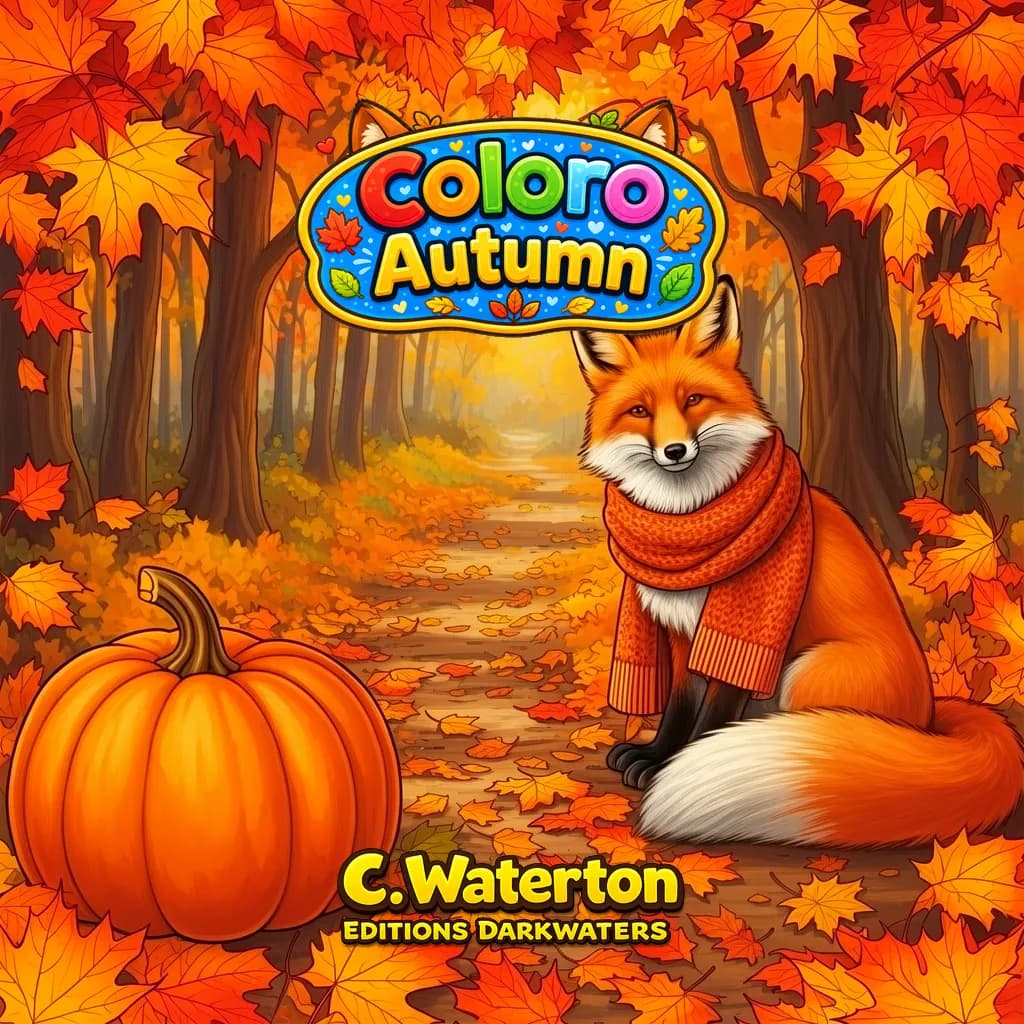
At 3-4 years old, a large leaf, a pumpkin or a mushroom is enough. Around 5-6 years old, a woodland scene with a squirrel helps sustain attention. From age 7 onwards, detailed motifs - leaf veins, the scales of a pine cone - build precision. In practice: match the level of detail to the child's attention span. Pumpkins, leaves, acorns, foxes and apples: all these designs are waiting in Coloro Autumn, our autumn coloring book for ages 4 to 10.
| Âge | Motifs d'automne adaptés | Ce que l'enfant travaille |
|---|---|---|
| 3-4 ans | Feuille, citrouille, champignon | Grandes zones, préhension du crayon |
| 5-6 ans | Scène de forêt, écureuil | Attention, couleurs de saison |
| 7-10 ans | Nervures, motifs détaillés | Précision, sens du détail |
How can you extend the activity around autumn?
Combine coloring with a trip outdoors: collect leaves, compare their colors, then color them in. The activity becomes a small nature discovery. Want to follow the seasons in color? Discover our cozy coloring books or the full collection. In practice: display the best pages to decorate the home in autumn colors.
How do you connect coloring with autumn nature?
Autumn is a season to observe: on a walk, collect a leaf, a chestnut and an acorn. Back at home, color the same items and compare the real colors. This back-and-forth between nature and paper anchors seasonal vocabulary and sharpens powers of observation. In practice: pair each session with a small collection: a leaf gathered, then colored.
What materials should you use for autumn colors?
Autumn calls for a warm palette: several shades of orange, red, yellow and brown. Give the child what they need to create gradients - that is what makes a leaf look realistic. Colored pencils, easier to shade than markers, are the best fit here. In practice: offer several tones of the same color so the child can create their own autumn gradients.
What mistakes should you avoid in autumn?
- Offering only one shade per color: gradients are what create realism.
- Giving very fine motifs to a toddler.
- Forgetting to link it to the real season (walks, collecting).
- Forcing a long session when the light fades at the end of the day.
Does autumn coloring prepare children for seasonal celebrations?
Yes, gently. Pumpkins, leaves and mushrooms bring in the atmosphere of Halloween and the first autumn evenings. Coloring these motifs means entering the season and, without realizing it, preparing decorations to come. The best pages can also dress up a window or a party table. In practice: keep the autumn pages to decorate the house for Halloween.
At what age should children start coloring autumn motifs?
From age 3, with large areas such as a leaf or a pumpkin.
Is autumn coloring educational?
Yes: it introduces seasonal colors, enriches vocabulary and develops fine motor skills.
Which autumn motifs do children like best?
Leaves, pumpkins, mushrooms, squirrels and acorns come up most often.
How can you help a child choose colors?
Offer several shades of orange, red and brown for realistic gradients.
How can you extend the activity?
Pair coloring with a walk: collect leaves, look at them, then color them.
What colors should be used for autumn?
Warm tones: several shades of orange, red, yellow and brown, for beautiful gradients.
How can you decorate the home with coloring pages?
Display the nicest leaves and pumpkins in the window, or make an autumn garland.