
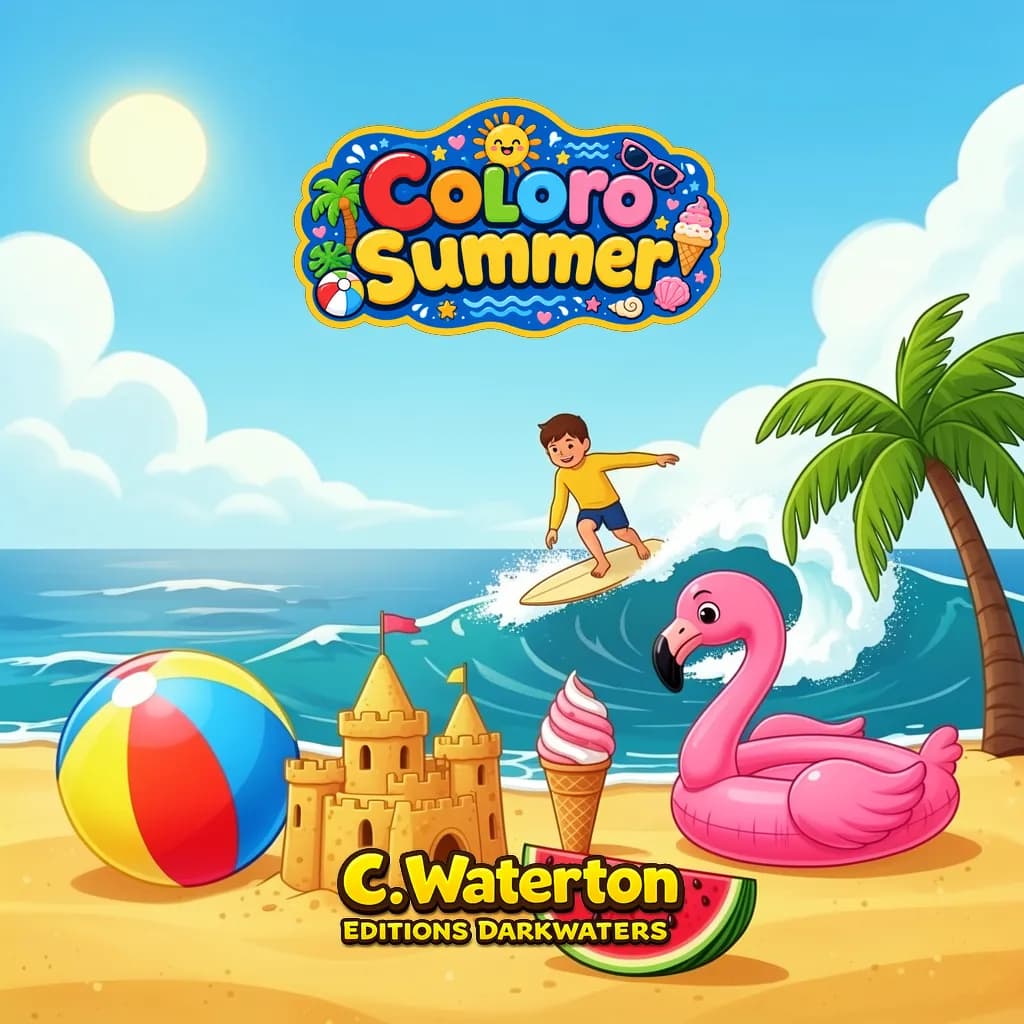
- Screen-free activity, perfect for long vacation afternoons.
- Summer motifs: beach, sun, ice creams, shells, sea animals.
- Fine motor skills: holding the pencil prepares the writing movement.
- Quiet moment after a morning at the beach or the pool.
- From age 3: large areas for little ones, detailed scenes afterwards.
Why is coloring ideal during summer break?
School breaks are long, and there are many days to fill. Summer coloring offers a calm pause between two lively activities: after the beach or the pool, the child settles down, concentrates and relaxes. It is a simple alternative to screens, needing nothing more than a table and a few pencils. In practice: keep a coloring book in the beach bag for quiet moments in the afternoon.
How do you keep a child busy without screens in summer?
Coloring ticks many boxes: it channels energy, develops fine motor skills and needs neither battery nor connection. By following the outline of a sun or a fish, the child strengthens hand-eye coordination - the foundations of writing, a link documented by the NAEYC. In practice: offer 15 to 20 minutes of coloring during the hottest part of the day, in the shade.
Which summer motifs should you color according to age?
At 3-4 years old, favor large, simple motifs: a sun, an ice cream, a beach ball. Around 5-6 years old, richer scenes - a sandcastle, an underwater scene - support attention. From age 7 onwards, detailed settings and repeated patterns (fish scales, waves) work on precision. In practice: adapt the complexity of the motif to the child's attention span, not to what they happen to want at the time. Beaches, ice creams, palm trees and sandcastles all feature in Coloro Summer, our summer coloring book for ages 4 to 10.
| Âge | Motifs d'été adaptés | Ce que l'enfant travaille |
|---|---|---|
| 3-4 ans | Soleil, glace, ballon | Grandes zones, préhension du crayon |
| 5-6 ans | Château de sable, fond marin | Attention, choix des couleurs |
| 7-10 ans | Décors détaillés, motifs répétés | Précision, sens du détail |
How do you create a coloring corner on vacation?
You do not need much: a table in the shade, pencils already sharpened, and a coloring book left open and within reach. The child comes back to it of their own accord between games. You'll find summer motifs and many other themes in our spring coloring books and the rest of the Coloro collection. In practice: leave the materials accessible all week rather than putting them away after each session.
What materials should you use for summer coloring?
For summer, favor well-sharpened colored pencils that withstand the heat and do not run like markers. Above all, have plenty of blues, yellows and greens for skies, suns and the sea. A rigid pouch protects the pencils in the beach bag. On a sunny patio, seat the child in the shade: low-angle light strains the eyes and makes the paper glare. In practice: one set of sharpened pencils in a rigid case is enough; avoid markers that dry out in the sun.
Does coloring replace screens on the move?
In the car, on the train or in a waiting room, a coloring book keeps a child occupied without batteries or a connection. Unlike screens, it does not wind them up before bedtime and is easy to share between siblings. For journeys, choose simple motifs that can be picked up again in short bursts. In practice: keep a small book and a few pencils in the bag for all those summer waits.
What mistakes should you avoid in summer?
- Do not take pencils out in full sun: seat the child in the shade.
- Offer a scene that is too detailed to a toddler: they will give up before finishing.
- Forget to protect the coloring book in the beach bag (sand and damp).
- Force a long session: 15 regular minutes are better.
Is summer coloring educational?
Yes, much more than it seems. By coloring a fish, a crab or a seashell, the child discovers the animals of the seashore, learns their names and associates each one with its color. Beach scenes also help with talking about the weather, the sand and the waves. Summer coloring then becomes a little lesson in the world around them, tucked into an activity that remains above all enjoyable. In practice: use each page to name the sea animals and talk about vacations.
At what age can a child color summer motifs?
From age 3, with large areas and simple motifs such as a sun or an ice cream.
Is coloring a good activity during school breaks?
Yes: it keeps the child occupied calmly, without screens, and develops fine motor skills and concentration.
Which summer motifs do children like most?
The beach, the sun, ice creams, shells and sea animals come up most often.
How do you keep a child busy without screens in summer?
Coloring is ideal: it needs only a table and pencils, and channels energy after a lively activity.
How long does a child spend coloring?
About 10 to 15 minutes at around age 4, up to 30 minutes at around age 8 to 10.
Is coloring suitable for car journeys?
Yes: with no battery or connection, it keeps the child occupied calmly and can be picked up again in short bursts.
How do you stop a child getting bored in summer?
Vary the motifs (beach, sea animals, ice creams) and alternate free coloring with scenes to complete.