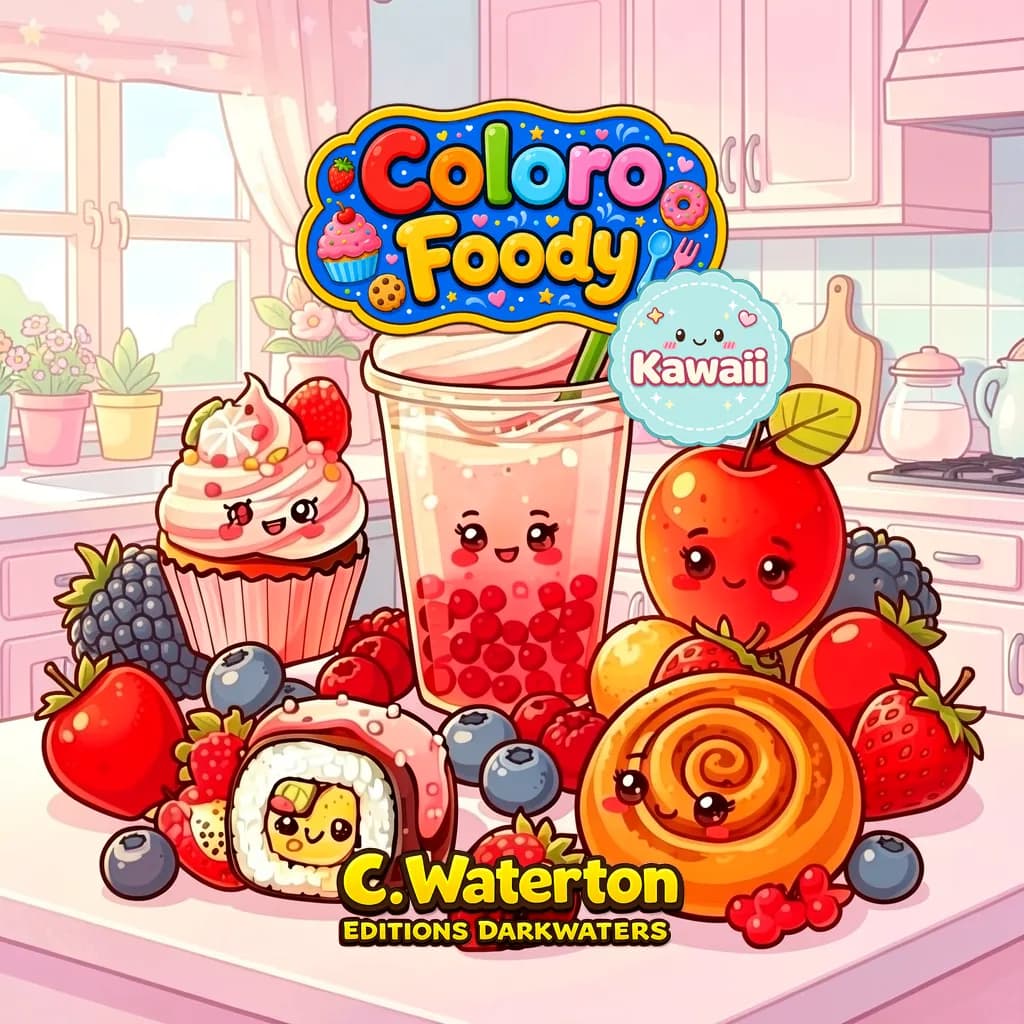
Kawaii coloring: cute donuts, ice creams and fruits with big eyes. Discover age-appropriate motifs (3-5, 6-8, 9+) and the benefits for children's fine motor skills and creativity
Joyful, appealing world that captivates children.
Kawaii motifs: donuts, ice creams, fruits and cakes with big eyes.
Pastel and bright colors to explore.
Fine motor skills: tracing outlines prepares for writing.
From age 3: large motifs for little ones, details later.
What is the kawaii style?
"Kawaii" means "cute" in Japanese. The style turns everyday objects - especially food - into adorable characters with big eyes and tiny smiles. A donut, an ice cream or a strawberry become friends to color in. This soft, reassuring tone appeals to children straight away. In practice: let the child choose bright or pastel colors: kawaii suits both.
Why do children like kawaii coloring so much?
The rounded shapes, smiling faces and delicious colors make these motifs very appealing. Children want to bring these little characters to life, which makes the activity motivating and lasting. They return to it on their own, which helps to establish the coloring habit. In practice: start with the child's favorite foods to get the activity going.
Which kawaii motifs should you color by age?
At 3-4 years old, a big donut, an ice cream and a smiling strawberry are enough. Around 5-6 years old, a small scene (a tea party, a bakery display) helps sustain attention. From age 7, detailed and repeated motifs (icing, sprinkles) build precision. Tracing around a little round character also develops hand-eye coordination, according to the NAEYC. In practice: choose the intricacy of the motif according to the child's attention span. Smiling cupcakes, donuts, ice creams and macarons fill Coloro Food, our kawaii treats coloring book for ages 4 to 10.
Âge
Motifs kawaii adaptés
Ce que l'enfant travaille
3-4 ans
Donut, glace, fruit souriant
Grandes zones, préhension du crayon
5-6 ans
Goûter, vitrine de pâtisserie
Attention, choix des couleurs
7-10 ans
Glaçages, motifs répétés
Précision, sens du détail
How can you extend the kawaii world?
Once the child has colored their foods, they can invent names for them, create a story, or cut them out to play shop. Coloring becomes a creative starting point. More cute faces to color await in our unicorn coloring pages or the whole Coloro universe. In practice: cut out the best figures to make cards or a mobile.
Which colors work best for successful kawaii coloring?
The kawaii style loves two registers: soft pastels (powder pink, mint, lavender) and bright, delicious colors. Let the child choose: both work. Adding little pink cheeks to the characters and a white highlight in the eyes (left white) strengthens the cute effect. In practice: show the child the trick with pink cheeks and the white reflection in the eyes.
Does kawaii coloring make children want to color more often?
Yes: attachment to the little characters is a powerful driver. A child who adores ice creams or donuts will come back to these pages of their own accord. It's an excellent way to establish the coloring habit - and therefore work on fine motor skills - without ever forcing it. In practice: start with the child's favorite foods to anchor the coloring habit.
What mistakes should you avoid with the kawaii style?
Coloring in the eyes completely: the little white highlight is the whole charm.
Offering motifs that are too detailed for a toddler.
Putting the workbook away when the child would come back to it on their own.
Where does the kawaii style come from?
Kawaii was born in Japan, where the "cute culture" has shaped everyday life for decades. The idea: make any object appealing by giving it a soft face, big eyes and a small smile. Applied to food, this style turns a simple cake into an adorable character. It is this universal tenderness that explains its success with children around the world. In practice: explain to the child that "kawaii" means "cute" in Japanese.
What is a kawaii coloring page?
A coloring page with Japanese-style "cute" motifs: foods with big eyes and a little smile, such as donuts or ice creams.
At what age can children start kawaii coloring?
From age 3, with large simple motifs like a donut or an ice cream.
Is kawaii coloring educational?
Yes: it develops fine motor skills, color sense and makes children want to color regularly.
Which kawaii motifs do children like best?
Donuts, ice creams, fruit and smiling cakes come up most often.
How can you extend the activity?
Invent names and stories for the characters, or cut them out to play shop.
Do boys enjoy kawaii coloring too?
Yes: the cute, tasty world appeals to all children, without distinction.
At what age should you start kawaii coloring?
From age 3 with large simple motifs, then more detailed scenes as they grow older.