- Imagination: the magical world encourages the child to invent stories.
- Freedom of color: a unicorn can be pink, blue, rainbow or green.
- Fine motor skills: holding the pencil and staying within the lines prepares for writing.
- Concentration: finishing a fairy-tale scene trains attention.
- Without screens: a calm, creative break, ideal as a gift or for the weekend.
Why do unicorns fascinate children so much?
The unicorn brings together everything that captivates a child: a recognisable animal, a touch of magic and a world where anything is possible. It does not exist in the playground, and that is precisely why it appeals: coloring a unicorn means stepping into a story where the child decides. Rainbows, castles, stars and flowers become the setting for a story they invent page after page. This emotional attachment makes the activity motivating and long-lasting - children come back to it on their own. In practice: start from their love of unicorns to establish a coloring habit, rather than imposing a "useful" theme.
How does unicorn coloring stimulate imagination?
Unlike a real animal with "expected" colors, the unicorn has no required palette. The child can invent a rainbow mane, a golden horn or a violet coat: each choice tells a story. This kind of experience reflects what the NAEYC describes as open-ended art: when the child chooses, explores and expresses themselves, they develop language, confidence and the pleasure of creating, not just a "correct" result. Unicorn coloring then becomes a testing ground for the imagination. In practice: comment on the story behind the colors ("why is this unicorn blue?") rather than correcting the result.
Does unicorn coloring also develop motor skills and attention?
Yes. Behind the magic, the movement stays the same: holding the pencil, applying pressure, following a contour. According to Naître et grandir, drawing and coloring exercise fine motor skills, attention and reasoning - and coloring also trains hand-eye coordination. A unicorn scene with mane, horn and setting requires moving from a large area to details, which supports concentration without exhausting it. In practice: alternate simple pages with richer ones to gradually lengthen attention span.
Which colors should you use to color a unicorn?
There is no "right" color for a unicorn - and that is the strength of the theme. Pastel pink is often popular, but midnight blue, mint green or a rainbow gradient are just as valid. Invite the child to name their colors (turquoise, fuchsia, gold): vocabulary grows alongside the scene. If several children are coloring together, each can have "their" unicorn without competing over the model. In practice: offer a varied box of pencils and avoid saying "real unicorns are pink".
How do you choose a unicorn coloring book by age?
A successful coloring page is a finished coloring page. Between 4 and 6 years old, favor large areas and thick outlines: a simple unicorn, a broad rainbow, few elements. Around 6 to 7 years old, the child can handle a scene (castle, flowers, stars). From age 8, detailed mane, repeated patterns and rich backgrounds support attention. In practice: choose the complexity according to the child's real attention span, not age alone.
| Âge | Motifs de licorne adaptés | Ce que l'enfant travaille |
|---|---|---|
| 4-5 ans | Licorne simple, grandes zones, arc-en-ciel large | Préhension du crayon, remplissage |
| 6-7 ans | Licorne en scène, château, fleurs | Précision du tracé, choix des couleurs |
| 8-10 ans | Crinière détaillée, décors féériques riches | Attention soutenue, nuances et dégradés |

- Error 1: imposing pink "because it's a unicorn" - you cut imagination.
- Error 2: offering a page that is too detailed for a 4-year-old - the child gives up.
- Error 3: correcting "impossible" colors - a green unicorn is still a success.
- Error 4: only offering thin printed sheets that markers bleed through.
- Error 5: putting the book away after one session instead of leaving it accessible.
Which unicorn coloring book should you give a child?
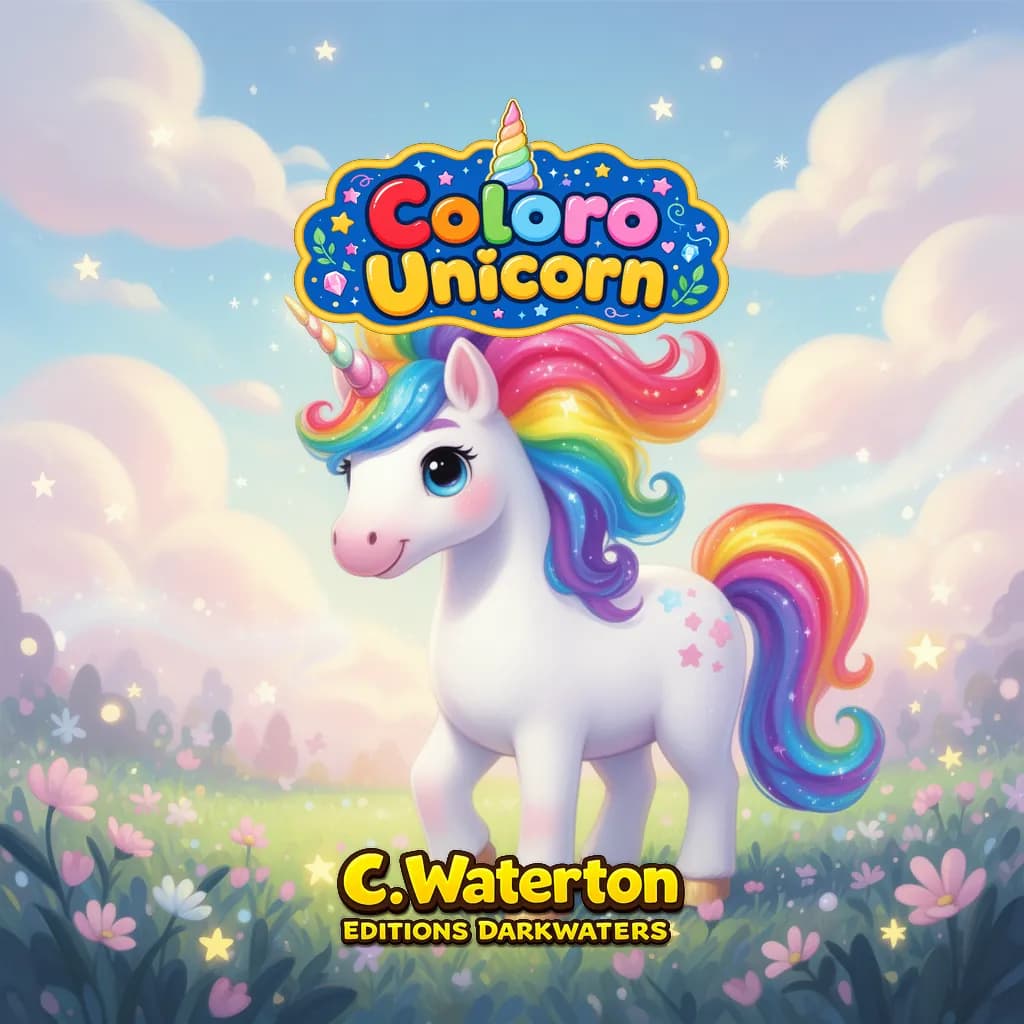
A good unicorn coloring book matches the age range, has clear outlines and remains coherent from start to finish. That is what Coloro Unicorn offers: 102 pages and 50 illustrations for ages 4 to 10, with unicorns, rainbows, castles and magical settings. To vary the themes, Coloro Animals extends the coloring pleasure; the full range is in our coloring books. In practice: check the age range and theme consistency before giving a unicorn coloring book.
From what age can a child color unicorns?
From age 4, with large areas and clear outlines. Detailed scenes (castle, rich mane) are better from age 7 to 8.
Is unicorn coloring educational?
Yes: it stimulates imagination, enriches color vocabulary and works fine motor skills and attention, without screens.
Should a unicorn be colored pink?
No. The appeal of the theme is freedom: a unicorn can be any color, and that freedom fuels creativity.
Printable unicorn coloring or a book: which should you choose?
Printable sheets are handy. A book offers thicker paper, a coherent progression and an item to keep - better for a lasting gift.
How long can a child stay focused on a unicorn coloring page?
Around 10 to 15 minutes at 4 to 5 years old, and 20 to 30 minutes at 8 to 10 years old. Prefer several short sessions.
Is a unicorn coloring book a good gift idea?
Yes, especially for a child who loves unicorns: birthdays, holidays or a calm alternative to screens.