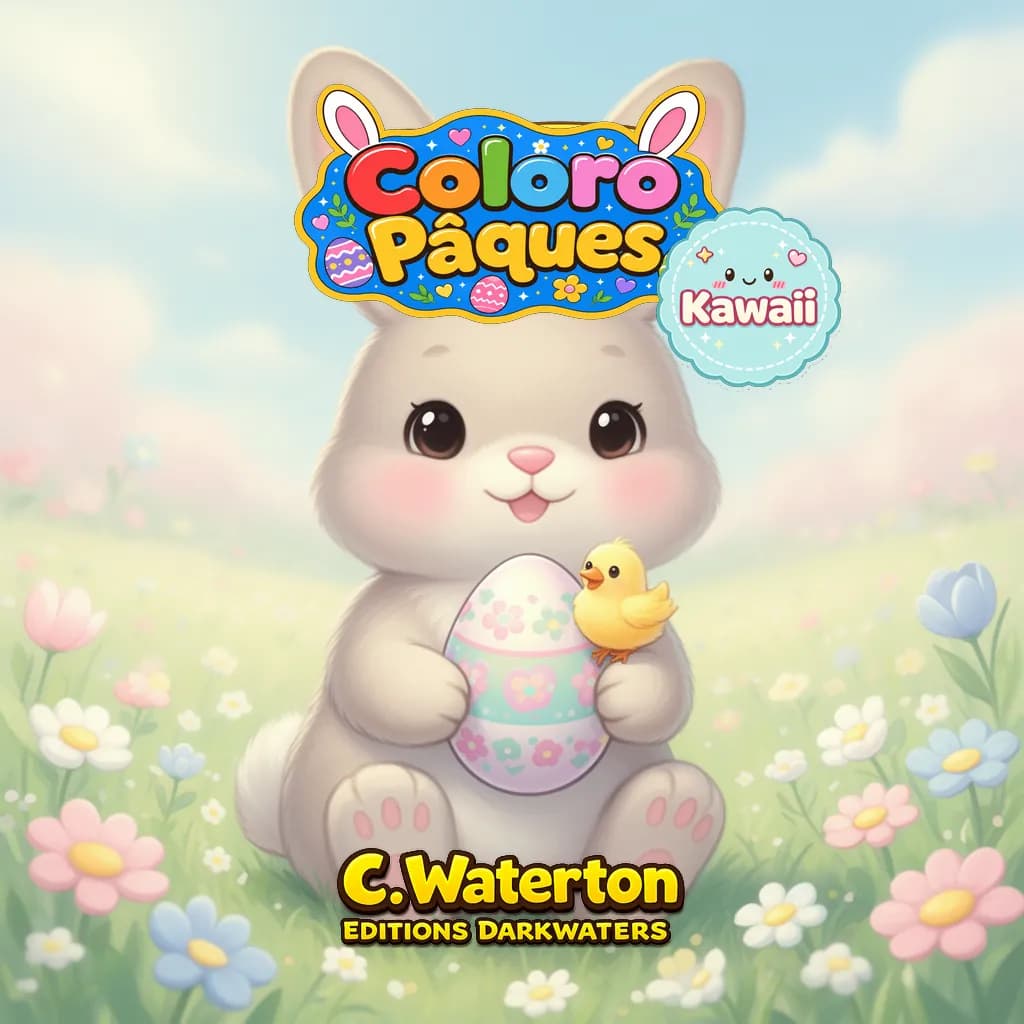
Bunnies, chicks and decorated eggs: why Easter coloring keeps 4- to 10-year-olds so happily occupied, which motifs to choose by age, and how to set it up at home.
Calm activity: coloring soothes children during Easter preparations and after the egg hunt.
Screen-free: a creative break that costs neither battery nor negotiation.
Fine motor skills: holding the pencil and staying within the lines prepares the hand for writing.
Seasonal motifs: bunnies, chicks, decorated eggs, full baskets and spring flowers.
Ages 4 to 10: large areas for little ones, detailed scenes for older children.
Why do children enjoy Easter coloring so much?
Easter coloring brings together two things children love: a celebration they are looking forward to and characters they recognize at a glance. The bunny, the chick and the decorated egg are simple, rounded and expressive figures - easy to identify from age 4, and easy to make their own in color. There is also the seasonal effect: coloring a full basket the day before the egg hunt stretches out the anticipation and makes it pleasant instead of endless. In practice: bring Easter coloring pages out a few days before the holiday, to build the atmosphere rather than fill a gap.
What are the benefits of coloring for a child aged 4 to 10?
Coloring first and foremost works fine motor skills: holding the pencil, guiding it and controlling pressure are movements that prepare directly for writing, as Naître et grandir points out. The benefit is also emotional: a study published in Art Therapy (2012) shows that coloring a structured pattern reduces anxiety far more effectively than coloring a blank sheet. The outline of the drawing - the traced boundaries - is precisely what soothes. In practice: to calm an excited child, offer a coloring page with clear outlines rather than a blank sheet.
Which Easter motifs should you color by age?
A successful Easter coloring page is a finished one. Between ages 4 and 6, a child needs large areas and thick outlines: a big egg, a nicely round bunny, a chick made of three shapes. Around ages 5 to 6, drawings become more precise and detailed, and richer scenes are easier to handle. From age 7, a full basket, a flower-filled setting or repeated patterns on an eggshell hold attention without breaking it. In practice: choose the complexity of the motif according to the child's attention span, not their mood at the time.
Âge
Motifs de Pâques adaptés
Ce que l'enfant travaille
4-5 ans
Gros œuf, lapin simple, poussin
Préhension du crayon, remplissage de grandes zones
6-7 ans
Panier garni, lapin en scène, fleurs
Précision du tracé, choix des couleurs
8-10 ans
Œufs à motifs, décors printaniers détaillés
Attention soutenue, sens du détail et des nuances
How do you set up an Easter coloring session at home?
An Easter coloring session only needs three things: a clear table, good lighting and pencils already sharpened. Allow 15 to 30 minutes depending on age, and leave the book open and within reach rather than putting it away between sessions - the child will come back to it on their own. If several children color together, give each of them their own page to avoid arguments over colors. One simple way to extend the activity: cut out the nicest pages and display them, or tuck them into the Easter basket. In practice: set up a coloring corner that stays accessible throughout the school break, rather than a single session on Easter Day.
Printable Easter coloring pages or a coloring book: which should you choose?
Printable Easter coloring pages are handy: they are free and immediate. Their limitation is practical - thin paper that felt pens bleed through, variable print quality, loose sheets that end up in the bin. A coloring book is the opposite: thicker paper, illustrations that feel coherent together, a progression from simple to detailed, and an object worth keeping. For a one-off celebration like Easter, it is also what turns a stop-gap activity into a keepsake. In practice: print a page if you need a quick fix, give a book if you want the activity to last beyond the weekend.
Mistake 1: offering a drawing that is too detailed for a 4-year-old - they give up before finishing.
Mistake 2: printing on paper that is too thin, so felt pens bleed through on the first page.
Mistake 3: correcting the colors "that are not the right ones" - a blue bunny is still a successful bunny.
Mistake 4: bringing out the coloring pages only on Easter Day, when the child is already overexcited.
Mistake 5: putting the book away after one session instead of leaving it accessible during school breaks.
Which Easter coloring book should you give a child?
A good Easter coloring book covers the whole target age range, offers clear outlines and stays within one coherent world from start to finish. That is what Coloro Pâques Kawaii offers: 102 pages and 50 illustrations designed for ages 4 to 10, with kawaii bunnies, chicks, decorated eggs, full baskets and spring flowers. Once the season has passed, Coloro Printemps takes over with the same level of detail; the full collection is in our coloring books. In practice: check the stated age range and the paper thickness before giving a coloring book.
At what age can a child color Easter pictures?
From age 4, with large areas and clear outlines. Detailed scenes, such as a full basket or patterned eggs, suit children from 7 onwards.
What are children's favorite Easter motifs?
The bunny, the chick, the decorated egg and the full basket come up most often. Kawaii versions, with rounded shapes and big eyes, are especially popular with 4- to 8-year-olds.
Is Easter coloring really a calming activity?
Yes. A study published in Art Therapy in 2012 shows that coloring a structured pattern reduces anxiety far more than coloring a blank sheet.
How long does a child stay focused on coloring?
Allow around 10 to 15 minutes for 4- to 5-year-olds, and 20 to 30 minutes for 8- to 10-year-olds. Several short sessions are better than one too long.
What materials should you use for Easter coloring?
Well-sharpened colored pencils for precision, felt pens for bold fills. Avoid heavily inked felt pens on thin paper: they bleed through the page.
Is an Easter coloring book a good gift idea?
Yes: it is an alternative to chocolate, or a complement to it, that keeps children occupied throughout the school break and lasts well beyond Easter weekend.