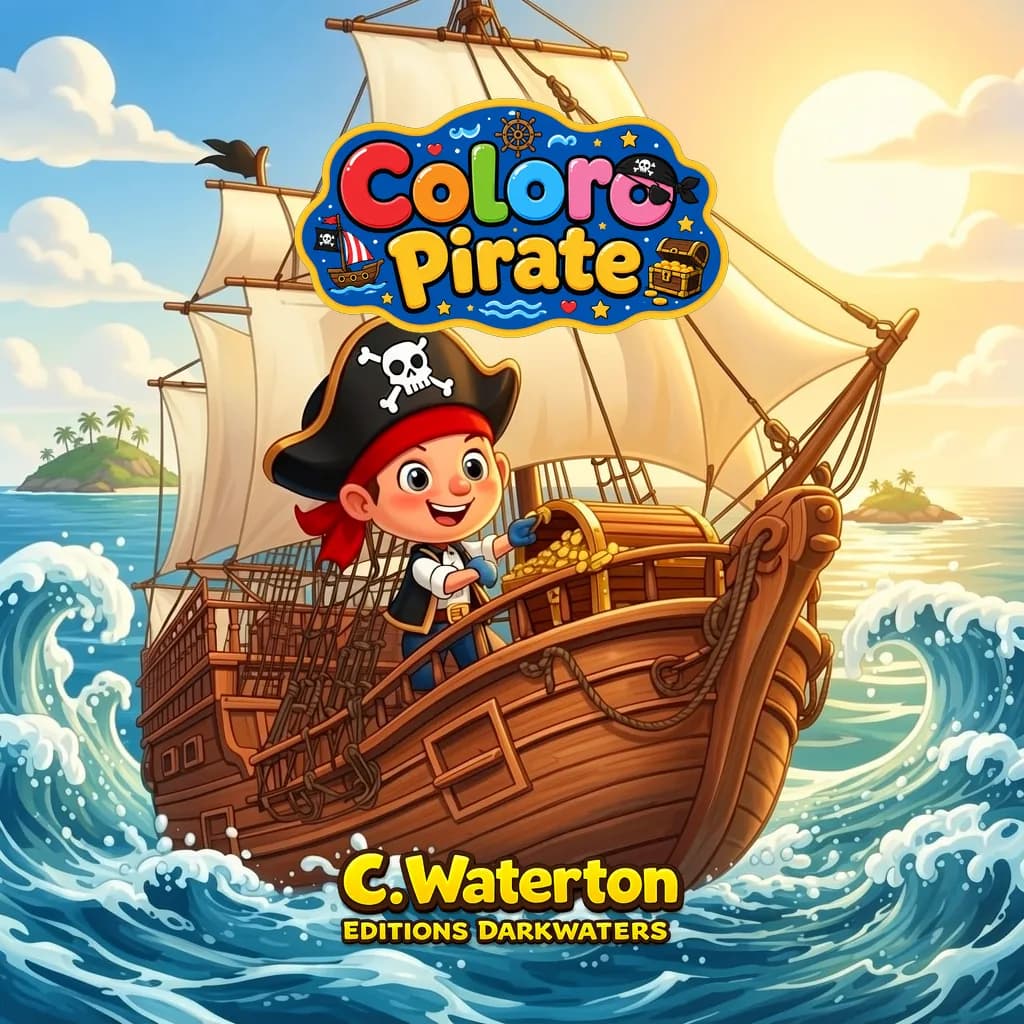
- Adventure world that captures children's attention.
- Pirate motifs: ships, treasure, parrots, maps, islands.
- Stimulates imagination and role play.
- Fine motor skills: following the outlines prepares for writing.
- From age 3: large motifs for younger children, richer scenes afterwards.
Why do pirates appeal so much to children?
Pirates embody adventure, mystery and freedom - themes that fascinate children. Coloring a ship or a treasure map means stepping into a story and bringing it to life in color. That attachment makes the activity motivating: the child immerses themselves in it and comes back to it. In practice: start with a small pirate story to make the scene appealing to color.
Does pirate coloring develop imagination?
Yes. By choosing the colors of a flag, a treasure or a parrot, the child creates their own world and extends the story. Coloring becomes a role-play tool: after coloring their map, they can set off "on a treasure hunt" around the living room. In practice: turn the colored page into a game - a proper treasure hunt at home.
Which pirate scenes should you color by age?
At 3-4 years old, a big ship, a parrot and a chest are enough. Around 5-6 years old, a complete scene - island, palm trees, flag - supports attention. From age 7, a detailed treasure map, with symbols and routes, works on precision. Tracing the hull of a ship also sharpens hand-eye coordination, a skill highlighted by the NAEYC. In practice: choose the richness of the scene according to the child's attention span. Ships, treasure chests, maps and parrots: Coloro Pirates, our pirate coloring book follows this progression from age 4 to 10.
| Âge | Motifs de pirates adaptés | Ce que l'enfant travaille |
|---|---|---|
| 3-4 ans | Bateau, perroquet, coffre | Grandes zones, préhension du crayon |
| 5-6 ans | Île, drapeau, scène complète | Attention, imagination |
| 7-10 ans | Carte au trésor détaillée | Précision, sens du détail |
How can you extend the pirate play?
Once the scene is colored, let the child tell their story, invent a ship's name or draw their own map. Coloring becomes the starting point for a broader game. Sail on to more stories to color: our dinosaur coloring pages or the full collection. In practice: display the best page or slip it into a pirate "logbook".
What materials should you use for pirate coloring?
The pirate world likes bold colors: brown for chests and ships, red and black for flags, blue for the sea. Well-sharpened colored pencils are ideal, and a few felt pens give bright fills for the sails. Let the child invent the colors of their crew: a purple parrot is still a successful parrot. In practice: offer bold colors and let the child invent their own crew.
Does pirate coloring help children tell stories?
Very much so. A colored treasure map calls for a story: where does the path lead? what does the cross hide? By naming the places and characters, the child enriches their vocabulary and structures a narrative. Coloring becomes as much a language tool as a motor one. In practice: after coloring, ask the child to tell the story of their ship's adventure.
What mistakes should you avoid with an adventure theme?
- Imposing the "real" colors: imagination comes before realism.
- Offering a map that is too detailed for a 4-year-old.
- Interrupting the story they invent around their page.
- Putting the book away instead of leaving it accessible to extend the game.
Do girls as well as boys enjoy pirate coloring?
Absolutely. Adventure, treasure and sea travel speak to all children, without distinction. In fact, you will find as many captains as cabin boys, mermaids as parrots. Offering a pirate world means opening up a shared imagination where everyone invents their own crew and story, whatever their taste for bright or soft colors. In practice: present the pirate world as an adventure open to everyone, without stereotypes.
From what age can children color pirates?
From age 3, with simple large motifs such as a ship or a parrot.
Is pirate coloring educational?
Yes: it stimulates imagination, develops fine motor skills and supports role play.
Which pirate motifs do children like best?
Ships, treasure chests, parrots and treasure maps come up most often.
Does coloring help imagination?
Yes: choosing the colors and extending the story exercises the child's creativity.
How can you extend the activity after coloring?
Turn the page into a game: a treasure hunt at home or a pirate logbook.
How do you make a pirate logbook?
Gather the colored pages in a folder, add a map drawn by the child and a few "captain's notes".
Does pirate coloring help vocabulary?
Yes: naming the ship, the treasure, the island and the characters enriches language while playing.